

The sports industry is undergoing a structural shift in how it understands and applies artificial intelligence. After an initial wave of experimentation with visible, consumer-facing tools – automated content, image generation, and fan-facing media – the real focus is now moving behind the scenes. The long-term value of AI in sport lies not in isolated apps, but in its integration as a core operational layer that reshapes how organizations think, work, and make decisions.
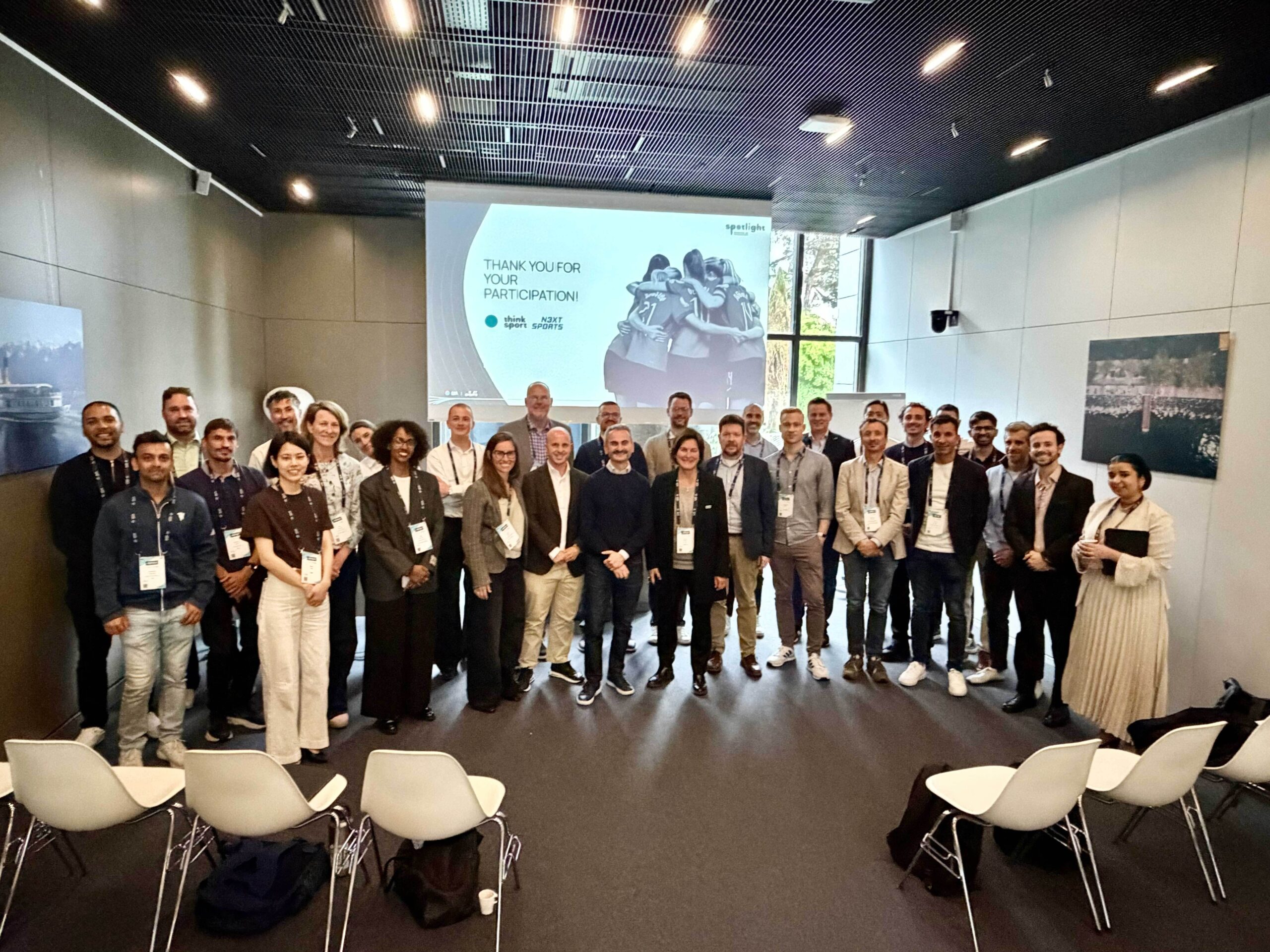
This was the central theme of the first 2026 ThinkSport Spotlight workshop in Lausanne, co-hosted by ThinkSport and N3XT Sports. The session brought together representatives from international federations, academic institutions, and corporate organizations to explore what it means to move beyond tools and treat AI as a cultural and organizational transformation. Instead of reviewing the latest consumer software trends, participants examined the governance, ethics, and internal readiness required to deploy AI as part of their operating model.
Addressing the strategic disconnect and capability gap
Across the sector, leadership teams increasingly recognize the strategic importance of AI. At the same time, there is a growing disconnect between that ambition and what is happening day to day inside organizations. Rigid processes, limited internal skills, and unclear ownership of AI initiatives slow down execution. Many management teams are interested in automation but lack the technical knowledge, time, and budget to implement it effectively, creating a persistent gap between fast-moving external technologies and slower internal corporate processes.
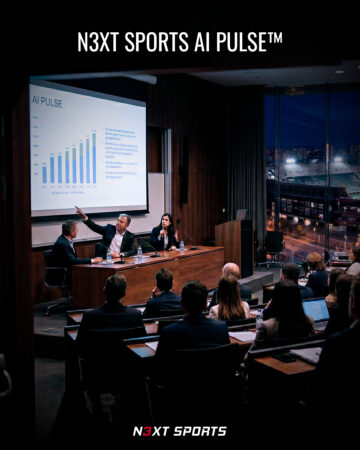
The workshop tackled this execution gap directly. Participants took part in a real-time workforce assessment using N3XT Sports’ AI Pulse™ framework, which measures practical AI proficiency, readiness, and maturity across sports industry workforces. The results showed that most organizations are still in the early stages of adoption, with an average maturity score of 2.4 out of 5. Back-office efficiency, administration, and process automation emerged as the primary value drivers, while budget constraints, time limitations, and internal competency gaps were identified as key barriers. Generic large language models such as ChatGPT (primary), followed by Claude, Gemini, and GitHub Copilot, dominate daily usage – but they remain largely isolated from core corporate structures.
As ThinkSport General Director Claudine Breton noted, as AI moves from theoretical capability to operational reality, federations and other sports bodies face a critical need for structural readiness. Successful adoption requires balancing technological ambition with robust governance, clear compliance, and human oversight, ensuring that innovation ultimately serves athletes, operations, and wider communities.
Architectural integration: the Universal Data Pyramid
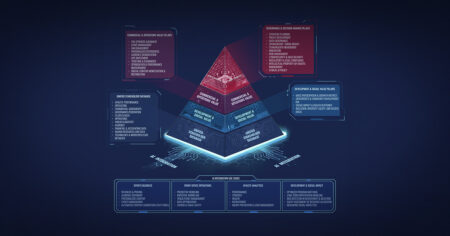
To help bridge the gap between pilot projects and enterprise-level capability, the workshop introduced the N3XT Sports Universal Data Pyramid™ as a conceptual blueprint for AI-enabled architecture. The model connects raw data assets to day-to-day execution in a clear, scalable hierarchy and anchors AI within a broader organizational design, rather than treating it as a standalone layer of tools.
At its base, the Universal Data Pyramid establishes a Unified Stakeholder Database that consolidates performance, commercial, and operational data into a single source of truth. This foundation reduces silos and provides consistent inputs for both human and AI-supported decision-making. Above it sits the AI Integration Layer, which acts as the connective tissue that converts static data into automated workflows. When properly configured, this layer enables federations, clubs, and leagues to scale operations – from administrative tasks to grassroots pathways and commercial delivery – without a linear increase in staff.
As data flows upward, it generates dual streams of value. On one side, Development and Social Value, including measurable grassroots trends and inclusion metrics. On the other, Commercial and Operations Value, such as predictive fan analytics and more efficient event operations. At the apex is Governance and Decision-Making, where data stops being a passive IT asset and becomes an active driver of strategy, accountability, and stakeholder trust.
Responsible AI and a structured implementation roadmap
A consistent theme throughout the workshop was that the transition to automated workflows requires a strict commitment to governance and risk management. Participants explored a Responsible AI framework structured around five core pillars: fairness, safety, transparency, privacy, and accountability. This framework gives sports organizations a compliance model for protecting stakeholders, mitigating algorithmic bias, and maintaining institutional credibility as they scale AI usage. To navigate these demands, the group emphasized maintaining a “human-in-the-loop” approach. AI systems can optimize processes and support decisions, but sports organizations need to define clearly where human judgment remains mandatory. That clarity is especially important as AI moves into sensitive areas like talent pathways, resource allocation, and disciplinary processes.
The workshop then outlined a four-part roadmap to shift from ad hoc tool adoption to a systematic AI strategy:
- People: Assess cultural readiness and workforce sentiment using diagnostics like AI Pulse to understand current skills, usage patterns, and perceived risks.
- Process: Map internal workflows to identify specific bottlenecks where AI can generate measurable efficiency and relieve staff of repetitive tasks.
- Roadmap: Design a phased, scalable strategy that moves proven, low-risk pilots into broader operational solutions, with clear success metrics at each stage.
- Security & Governance: Establish internal policies and security protocols to address data protection, copyright risk, and unauthorized software use.
As N3XT Sports CEO Mounir Zok put it, the true value of AI in sport does not lie in isolated, superficial applications, but in its integration as a core operational layer. By building unified data architectures and assessing workforce maturity, organizations can move from ad hoc tools to scalable, automated workflows that deliver lasting institutional value.
AI as cultural and organizational transformation
The emerging reality is that AI in sport is not simply about procuring software. It is a cultural and organizational shift that touches people, processes, and data architecture at once. Treating AI as an operational layer means rethinking how teams collaborate, how decisions are made, how data is managed, and how accountability is defined. It requires leadership to champion new ways of working and to invest in the skills and structures that allow AI to support – not replace – human expertise.
For sports organizations, the most effective path forward is to start building foundational AI capabilities now, using iterative, well-defined use cases to learn and scale responsibly over time. By aligning strategy, workforce readiness, architecture, and governance, AI can move from a collection of standalone tools to a resilient operational backbone that supports development, performance, and sustainable growth.