


We tracked cross-platform following for all 48 World Cup teams every day from kickoff to the final. The full Digital Maturity Index report, with the complete team-by-team breakdown, will be published in the coming weeks. Want a copy the moment it’s out? Fill out the form at the bottom of this page.
Six weeks of data. One consistent story: Attention is cheap. Ownership of it isn’t.
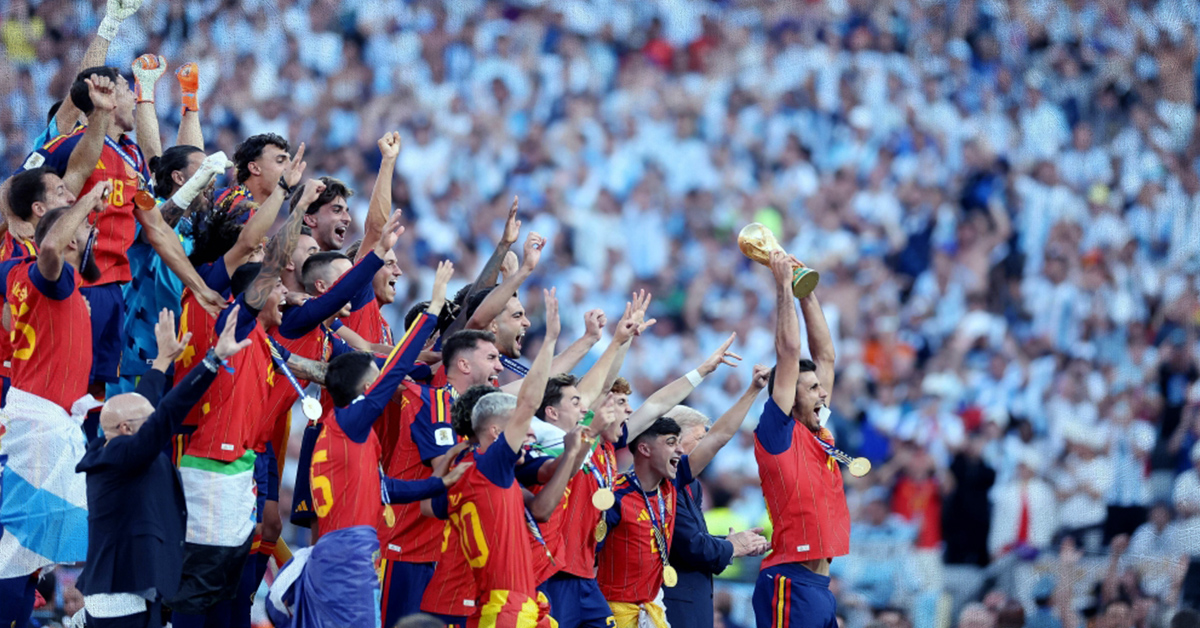
Spain beat Argentina 1-0 in extra time on July 19, Ferran Torres scoring in the 106th minute to end the biggest World Cup ever played. By Monday, Spain had also retaken top spot in the FIFA/Coca-Cola Men’s World Ranking from Argentina, the sport’s official verdict on the summer.
We’ve been running a second scoreboard since June 11: daily tracking of every team’s combined following across X, Instagram, TikTok and YouTube, the raw infrastructure behind the N3XT Sports Digital Maturity Index. Six weeks of that data lead to a conclusion that has nothing to do with who grew the most.
Growing the audience was never the hard part
Every team we tracked ended the tournament with more followers than it started with, from Turkey’s modest 4.6% to Cape Verde’s 447%. That range is wide, but the direction is universal, and that’s the point: a 48-team, three-country, six-week global event is a top-of-funnel machine almost by default. It pulls in adjacent markets, casual viewers, and fans of a rival team’s star player, all of whom follow along for the drama and cost a team nothing to acquire.
Argentina’s combined following grew from 25.0 million to 31.7 million over the tournament, a 26.5% gain. Spain’s grew from 16.6 million to 19.8 million, 18.9%. The runner-up out-grew the champion in both percentage and raw terms. On its own, that comparison doesn’t tell us much about either team’s digital maturity, and it shouldn’t be read as one. What it does illustrate is that top-of-funnel volume and tournament outcome don’t move in lockstep, which is exactly why follower growth is only one input into the DMI rather than the whole score.
That’s the distinction the Digital Maturity Index exists to make. Follower growth is one third of the DMI framework, the Digital Presence pillar. The other two, Fan Data Capabilities and Mobile App Sophistication, measure something the follower count can’t: whether a team can turn a person who followed along for one match into a fan it has a direct, ownable relationship with. Most of the growth we tracked this tournament sits entirely in that first pillar.
The real risk: A silent, passive audience by autumn
None of the growth above is automatically valuable. A new follower who showed up for a viral moment and never hears from the team again, in a format built for them specifically, has little reason to stay engaged. Some risk fading out of the team’s content as platform algorithms deprioritize dormant relationships. Some risk unfollowing outright once the next news cycle arrives. That’s the risk every team is carrying right now, in varying degrees, regardless of how large or small its tournament growth was: without a deliberate plan to convert this attention into a direct channel, some real share of this summer’s audience is likely to go silent well before the next major tournament begins.
That’s the work the tournament didn’t do for anyone. It’s the work that separates a team that treats this summer as a permanent shift in its fan base from one that treats it as a temporary spike it will have to re-earn from scratch next cycle.
Cape Verde shows how team and player numbers can diverge
Cape Verde’s combined team following grew from 170,090 to 930,600 over the tournament, a 447% increase, the largest percentage gain we tracked. The team was eliminated in the Round of 32 on July 3, a 3-2 extra-time defeat to Argentina.
Over the same window, goalkeeper Vozinha’s personal Instagram grew from roughly 31,500 to more than 29 million followers, according to Sportico, a larger raw gain than the team’s own account across all four platforms combined.
We don’t have visibility into what, if anything, either the team or the player did to convert that attention into a direct relationship with those new followers, so we won’t speculate here. What the comparison does highlight, at a general level, is a question every team with a breakout player or moment should be asking itself: when a viral moment lands on an individual account rather than the team’s own channels, what does the team’s plan look like for building its own direct relationship with the fans that moment attracted?
Egypt’s growth is real. Whether it’s retained is a different question
Egypt’s combined following grew from 5.7 million to 10.8 million, a 90% increase and one of the largest raw gains of any team we tracked, with TikTok following alone nearly tripling. Unlike Cape Verde’s story, this one built steadily across the tournament’s final three weeks rather than in one viral burst, and it barely registered outside our own tracking.
We don’t have visibility into what Egypt’s team did or didn’t do with that window, and we’re not drawing a conclusion either way. The general point stands regardless of the specific case: a follower gain of this size represents a meaningful opportunity for any team, and the value of that opportunity depends on what happens next, not on the size of the number itself.
Norway’s team and player numbers, side by side
Norway’s combined following grew from 1.8 million to 4.7 million, a 161.8% increase, during a tournament in which the team reached the Round of 16 and beat five-time champion Brazil, its furthest World Cup run in history. Over the same window, Erling Haaland’s personal Instagram added roughly 32.1 million followers, according to Sportico, a larger raw number than the team’s own account.
As with Cape Verde, we’re not attributing the team’s growth to any single factor, and we’re not making a claim about what Norway’s team has or hasn’t done to build on it. The two numbers are worth holding side by side simply because they illustrate, again, that a team’s own account and an individual player’s account can move on very different scales, and that the strategy for converting each into a lasting relationship is a distinct question.
Morocco has an unusual runway to work with
Morocco’s combined following grew 13.2%, from 9.0 million to 10.2 million, over a tournament that ended in a quarterfinal loss to France on July 9. That percentage sits below Cape Verde’s or Egypt’s, in part because Morocco’s starting base was already roughly ten times larger.
What makes Morocco a useful case to watch going forward isn’t this tournament’s growth rate on its own. It’s that Morocco is a confirmed co-host of the 2030 World Cup, which gives it four years rather than a normal qualifying cycle to work with. Whether that runway gets used to build Fan Data Capabilities and Mobile App Sophistication alongside the next round of audience growth, or simply to grow the audience again, is an open question we’ll be watching rather than one we can answer from this tournament’s numbers alone.
The USMNT’s growth came alongside a high-attention exit
The USMNT’s Round of 16 exit to Belgium on July 6 drew an unusual amount of attention, including a reported call from President Trump to FIFA over a suspended red card. The team’s combined following grew 19.6% over the tournament, from 6.2 million to 7.4 million, ahead of most teams eliminated at the same stage.
We aren’t asserting a causal link between the attention around that match and the team’s growth rate, and we don’t have visibility into what the team has done since to build on it. The more general question worth asking, for the USMNT and for every team in this piece, is how much of this summer’s growth gets carried forward into an owned relationship with fans versus how much simply fades as attention normalizes.
What this means going into 2030
Every team at this tournament got a version of the same gift: a global audience larger than the one it started with, delivered largely by the scale of the event itself. We don’t have visibility into how much of that gift has been converted into something durable so far, and that will vary by team. What we can say is that the follower count is the easy, visible number, and the harder, less visible work, moving that audience into a direct relationship before it goes quiet, is what will actually separate teams commercially over the next four-year cycle.
That is the operational gap N3XT Sports works with rights holders to close: not generating attention, which a World Cup does on its own, but building the Fan Data Capabilities and Mobile App Sophistication to keep it.
The complete Digital Maturity Index report for World Cup 2026, covering all 48 teams across the full tournament, publishes in the coming weeks. Fill out the form below to get your copy as soon as it’s ready.