


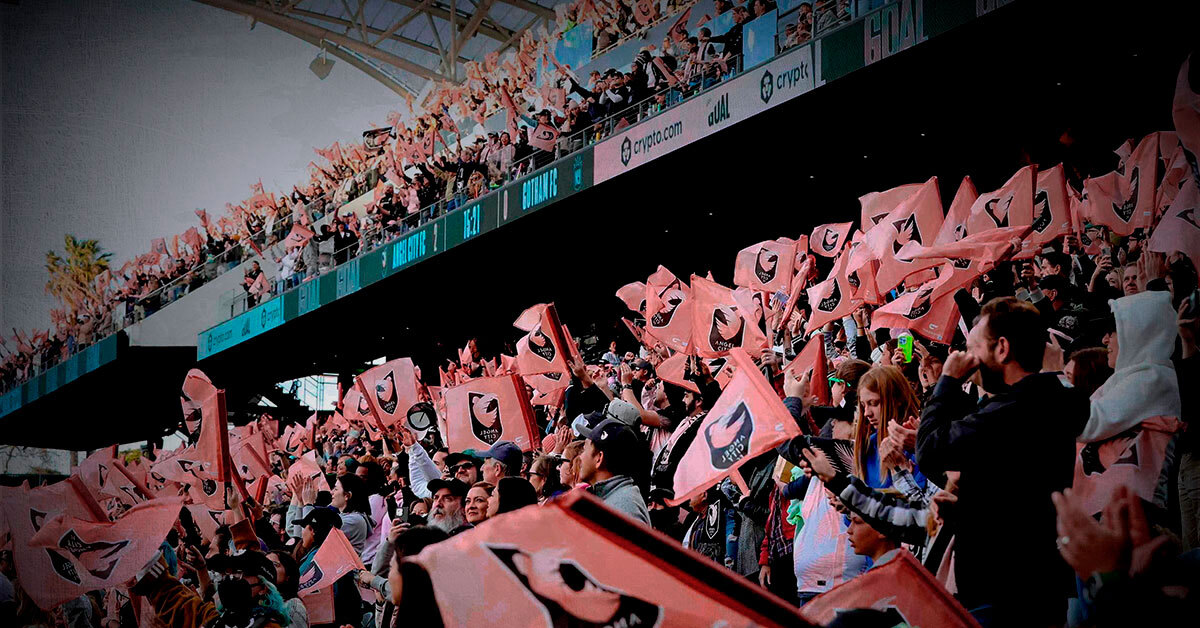
Women’s football clubs do not build durable revenue by starting with monetisation. They build it by
creating a fanbase that feels emotionally invested, culturally represented, and eager to return. Angel
City FC has become one of the clearest examples of that model in practice, combining purpose-driven
positioning, community connection, and commercial ambition in a way that has helped make it one of
the most valuable clubs in women’s sport.
That is why Angel City is such a useful case study. The club’s rise suggests that the most important
commercial question in women’s football may not be “How do we price tickets?” but rather “How do
we build a fan community strong enough that ticketing, partnerships, and premium experiences
become a natural extension of belonging?”
In a recent conversation, former Angel City executive Courtney Ksiazek described this dynamic in
practical terms. Ksiazek, who held a senior partnership marketing role at the club and has described
herself as focused on building community through sport, argued that fan growth in women’s football
depends less on chasing a generic mass audience and more on creating a clear identity that
supporters want to join.
Fanbase before monetisation
One of the most important lessons from Angel City is that women’s football cannot assume fans will
simply appear because the quality of play is improving. The product on the pitch matters, but the club
also needs a story, a point of view, and a sense of relevance in its city. Angel City understood this
early and built its commercial model around more than matchdays alone.
Ksiazek emphasized that fan growth begins when people feel the club stands for something larger
than results. In Angel City’s case, that meant presenting the team not only as a football property but
as a community institution, one that could reflect Los Angeles, elevate women’s sport, and offer
brands a more meaningful platform for engagement.
That approach matters because women’s football supporters are often still making an active choice to
discover and adopt a club. Unlike many legacy men’s teams, where fandom is inherited, women’s
clubs are often asking people to form a new habit. That means every touchpoint, from social content
to partnerships to stadium experience, has to help answer a basic question: why should this club
matter in my life?
Building identity in a crowded market
Los Angeles is one of the world’s most competitive sports and entertainment markets, which makes
Angel City’s early traction especially notable. The club drew strong attention before it had even played
a competitive match, using a mix of celebrity-backed visibility, civic relevance, and intentional
storytelling to make itself culturally legible beyond traditional football audiences.
Ksiazek pointed to partnerships as one of the mechanisms that helped reinforce that identity. At Angel
City, partnerships were not treated as simple logo placements. They were structured as part of the
club’s public narrative, often connecting women’s sport, community initiatives, and brand activation in
a way that gave both sponsors and supporters a clearer reason to care.
That distinction is important for clubs across women’s football. If partnership strategy feels
disconnected from supporter identity, it may generate short-term revenue but it rarely deepens fan
attachment. If, however, partners amplify the club’s mission and expand access points for fans, the
commercial strategy itself starts helping to build the fanbase.
What a healthy fanbase looks like
The temptation in sports business is to treat fan growth as a pure attendance story, but Ksiazek
argued that healthy demand is broader than crowd size. The stronger signal is whether the club is
creating repeat behavior, cultural affinity, and an ecosystem in which fans, players, community groups,
and commercial partners all strengthen one another.
Angel City offered several early indicators of that kind of momentum. Public reporting described
record-setting ticketing and sponsorship performance in the club’s early period, including multiple
home sellouts and attendance levels that compared favorably with established men’s properties in the
United States. The club’s valuation later rose to $250 million in the 2024 sale process and was
subsequently reported at $280 million in Forbes-based coverage, reflecting how strongly investors
viewed its long-term commercial upside.
Those numbers matter, but the deeper point is what sat behind them. Angel City did not simply find
demand; it cultivated it through a model in which supporters felt they were participating in something
modern, purposeful, and socially visible. That made fandom easier to start and more attractive to
sustain.
When fanbase becomes revenue
This is where the article usually begins in sports business, but in women’s football it is better seen as
the second chapter. Once a club has a recognisable identity and a committed audience, revenue
levers become more credible. Ticket pricing gains elasticity, partners receive more value, premium
inventory becomes easier to sell, and every full stadium strengthens the club’s broader market
position.
Angel City’s Fan-Fueled Player Fund is a useful illustration because it linked ticketing revenue directly
to participation and advocacy. The club committed 1 percent of net ticketing revenue from home
regular-season matches to a player fund, with participating players helping drive ticket sales through
their own marketing efforts. The initiative worked not only as a compensation mechanism but also as a
signal that matchday demand, player visibility, and fan engagement could reinforce one another rather
than sit in separate silos.
That lesson has wider relevance. In women’s football, monetisation tends to work best when it feels
additive to the supporter relationship. Fans are more likely to accept pricing ambition, premium
packaging, or commercial integration when they can see that the club is reinvesting in players,
experience, and community rather than merely extracting value.
Lessons for women’s clubs
The clearest takeaway from the Angel City story is not that every club needs Los Angeles scale,
celebrity investors, or record valuations. It is that women’s football clubs need a deliberate theory of
fan formation. They need to know who they are for, what they stand for, and how every part of the
organisation contributes to turning casual interest into loyal behavior.
For clubs trying to apply these lessons, three priorities stand out:
- Build a distinct identity before chasing aggressive monetisation; fans join narratives and
communities before they optimise ticket packages. - Treat partnerships as fan-building infrastructure, not just sponsorship inventory; the right
commercial activations can strengthen belonging and expand reach. - Connect revenue mechanisms to visible value creation; supporters respond better when
ticketing and commercial growth clearly benefit players, experience, or local impact.
For executives across women’s football, that may be the central strategic shift of the next few years.
Revenue growth will remain essential, but the clubs that win will likely be the ones that understand
revenue as an outcome of fan trust, not a substitute for it.