



As sports properties transform their operations through better digital and data management, building a tailor-made business strategy at any level can prove challenging without first defining their business goals and mapping out their current technological frameworks. Since the Covid pandemic, sports organizations have invested heavily in their direct-to-consumer (D2C) product portfolios in an attempt to generate audience and commercial growth. In many cases, this has opened new fan-engagement avenues with more digital touchpoints at play.
However, without first optimizing their technology stack, nor aligning their digital and commercial strategies, many sports properties have hit unforeseen operational barriers, highlighting disparities within disconnected ecosystems and, in turn, causing added operational costs. While rights holders want to strengthen their D2C portfolios, establishing a foundational framework that optimizes its digital and data maturity is necessary to maintain strong customer relationships while laying down the foundations for commercial growth and operational sustainability.
“Given the fact that digital transformation has become table stakes in a digitally led consumer market and is no longer a “nice-to-have” in sports, rights holders are considering how they can consolidate their existing technology stacks, so as to reduce running costs, build resilience within their brand, and discover new opportunities to maximize the value per fan without the need for further digital expansion,” explains Hisham Shehabi, N3XT Sports’ COO and MENA regional lead.
“This is an important point: digital maturity isn’t measured solely on the breadth of one’s digital portfolio, but its ability to serve consumers at every stage of the fan journey, while heightening productivity inside the organization. Optimizing the existing technology stack is therefore a vital first step to building resilience in a customer-facing, multi-stakeholder sports business.”
Sports properties require a robust and thorough assessment, during the discovery process, in order to achieve this operational balance. That’s why, when developing an overarching business strategy, whether that is to drive customer conversions through digital activations, for example, the assessment phase provides each organization with the essential intel for deciding how to approach any given project and the resources and frameworks required to turn their vision into reality.
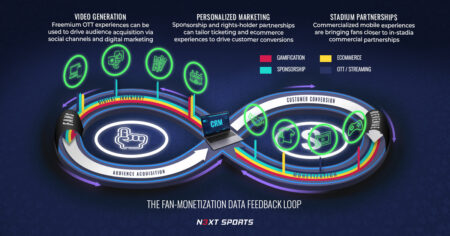
N3XT Sports delivers a thorough audit for every client
In order for sports organizations to generate value through operational optimization, assessing and then addressing how their digital frameworks serve dataflow and its cost to the overall business are critical. For example, N3XT Sports has supported the Fédération Équestre Internationale (FEI) to assess the advantages of adopting a customer relationship management (CRM) system into its ecosystem, with a primary focus on enhancing fan engagement across the equestrianism community and augmenting the governing body’s internal operations.
This includes the outlining of FEI’s channel matrix in collaboration with FEI’s digital team and defining the role of each of the organization’s highly diverse digital touchpoints, their place within the FEI fan-marketing funnel, and how they serve the FEI fans, athletes, and stakeholders.
“Our partnership with N3XT Sports is an important step towards creating a cohesive, engaging, and optimized user journey for our fans and stakeholders,” says Stéphane Schwander, FEI’s Head of Digital. “With the biggest equestrianism community worldwide, this initiative lays the foundations for the federation to harness fan data to scale its ongoing marketing activities.”
The assessment phase is a crucial stage on a sport organization’s digital transformation journey, providing a solid grounding for formulating a clear roadmap for digitalization across our client portfolio. By way of example, our dedicated Digital Transformation team led more than 150 workshops and interviews with United World Wrestling’s internal departments, covering more than 90 attendees and 18 stakeholders, during the assessment phase of the Olympic wrestling governing body’s digital transformation, which later included the integration of a mobile app, CRM capability, and the UWW+ over-the-top (OTT) streaming service.
This approach also relates to our work with the Professional Footballers’ Association (PFA), which appointed N3XT Sports to design and implement the union’s data and digital transformation strategic plan for building a multi-functional, member-centric digital ecosystem. Outlined in the PFA’s Digital Transformation Playbook, N3XT Sports completed a thorough assessment of the players’ union’s technological infrastructure, as part of the PFA’s digital audit, which discovered data silos, a heavy reliance on paper, and a non-scalable technology stack were standing in the way of the PFA presenting a clear picture of its members’ needs and coordinating its departments.
This included a holistic situational analysis focused on the PFA’s personnel and their relationship with internal processes and data, before outlining an ideal state for its digital frameworks as part of the PFA’s long-term digital roadmap. This has included the deployment of the digital-only PFA Member Portal, connected with a fully integrated and scalable PFA Employee Portal and CRM capability.
In order to develop an effective business strategy, sports organizations must first assess their internal frameworks and how they are currently serving, or indeed hindering, their operational efficiencies. At N3XT Sports, we support our clients at every stage of their strategy development. To find out more about how N3XT Sports can serve your organization and develop its very own tailor-made business strategy, fill out the form below, and we’ll be in touch. We look forward to hearing more about your journey.