


On 17 November, Nike held its first investor day since 2017. CEO Elliott Hill introduced Full Stride Ahead, a strategy built on one idea: get closer to athletes. A footnote in the release defines the term: if you have a body, you are an athlete.
The targets are specific. Nike wants about $5 billion in incremental revenue by fiscal 2031, with roughly $4 billion coming from five Performance Sports. Running heads the list. India, which Nike plans to triple in five years, was called one of its biggest opportunities in the world.
Investors were not convinced. Revenue keeps falling until fiscal 2029, and the stock closed down 6.3% on the day. But for the rest of the sports industry, the plan reads like a buyer’s brief. The world’s largest sportswear company has said where it will spend, and who it needs to reach.
Our view at N3XT Sports: the organizations that already hold the athlete relationship just became more valuable. That means race organizers who own the start line, federations that own the pathway, and athletes who now own their own audiences. The next growth cycle will be won by whoever is closest to the athlete, not whoever has the most shelf space.
What Nike said
Nike is narrowing its focus. Five Performance Sports (Running, Training, Global Football, Basketball and Outdoor) plus Sportswear, across 23 priority countries, are expected to drive more than 90% of revenue growth through fiscal 2031.
The plan rests on three pillars:
- EPIC creates demand through breakthrough innovation, product and storytelling.
- CONNECTED moves authority and resources closer to priority countries and cities, and builds deeper relationships with athletes and communities on the ground.
- FAST shortens product creation and uses data, technology and AI to speed up decisions.
Two shifts stand out. First, the growth engine is sport, not lifestyle. Performance Sports carry roughly $4 billion of the $5 billion target; Sportswear carries about $1 billion. Second, the map is changing. Nike expects Greater China revenue to stay roughly flat through fiscal 2031, after a 26% currency-neutral decline in the first quarter of fiscal 2027.
India is where both shifts meet. According to Business Standard, Nike sized the Indian athletic footwear and apparel market at about $9 billion today, growing more than 10% a year to roughly $14 billion by 2031. It plans to triple its India business in five years, led by running, training, sportswear and cricket, backed by a multi-year partnership with the Mumbai Indians.
The proof point was a running shoe. COO Venkatesh Alagirisamy presented the Vegam Run, built for Indian runners with local insight. It went from kickoff to production in five months, against up to two years in the past. Nike plans 2.5 million pairs this financial year, and the shoe will be sold beyond India.
Why running sits at the top of the list
Nike’s bet on running is a bet on participation, and the participation data is strong. In September, our COO Hisham Shehabi delivered a keynote at the Global Running Conference in Copenhagen, hosted by World Athletics alongside the Road Running Championships. What we brought home maps closely onto Nike’s plan.
- Running is social now. Strava reported that running clubs on its platform grew 3.5x in 2025. Gen Z is 75% more likely than Gen X to say a race or event is their main reason to exercise.
- The race is the economic peak. A Nielsen Sports study found the 2024 BMW Berlin Marathon generated more than €469 million in economic output in four days.
- The value leaks between races. Most organizers lose touch with their runners after race day. Their data sits across registration, timing and sponsor systems that do not connect.
That last point matters for any brand. A runner who trains for a marathon buys shoes, apparel, nutrition and tech for months. The race organizer is the one entity that sees the runner set the goal, train for it and cross the line. In Copenhagen we argued that the next wave of value in running will come from aggregators that connect technology, AI and brands across events. Nike has now told investors it wants to be closer to exactly that runner.
India: the runner is already at the start line
If Nike wants to reach the Indian runner, it needs to know where that runner gathers. For two decades, the answer has been Procam International’s races.
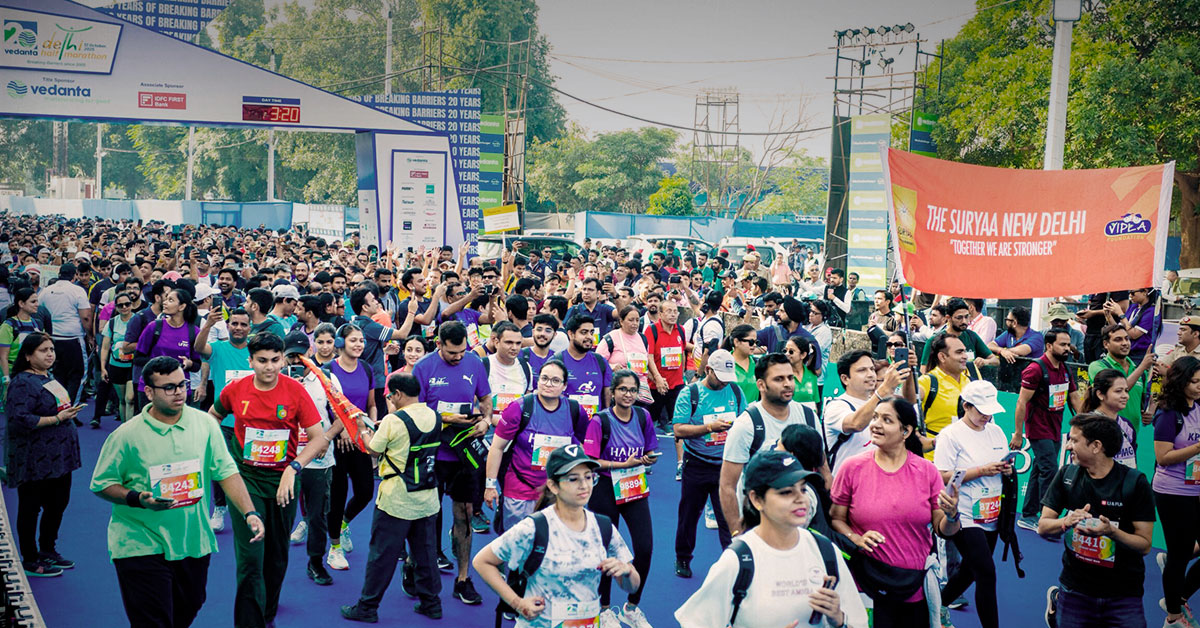
Procam built large-scale road running in India through its “Big Four”: the Tata Mumbai Marathon, the Vedanta Delhi Half Marathon, the TCS World 10K Bengaluru, and the Tata Steel World 25K Kolkata. The flagship, a World Athletics Gold Label race, shows the scale of the opportunity Nike is describing.
The Tata Mumbai Marathon 2026 impact report, produced with the International Institute of Sports Management, puts numbers on it. The 2026 edition drew 70,065 participants from 37 states and union territories and 46 countries, including 17,803 from outside Mumbai. Women made up 27% of the field, up 11.6%, and 60% of runners were aged 25 to 44.
Read those numbers as a brand would. Two-thirds of participants started running for health. They spent ₹112.88 crore (about US$11.9 million) on shoes and apparel, and another ₹87.79 crore (about US$9.2 million) on technology, gear and equipment. The race’s total socio-economic and health impact reached ₹663.23 crore (about US$69.8 million), up from ₹202.78 crore (about US$21.3 million) in 2020.
That is a single race, with a field that is young, health-driven, increasingly female and national in reach. The Government of Maharashtra now backs it as the state’s only government-sponsored sporting event for the next five years.
This is the asset Nike’s plan points to. Nike can build a five-month shoe for Indian runners. It cannot build twenty years of trust with them. Procam holds the moment Indian runners commit, train and finish, across four cities and four distances.
The question for Procam, and for every mass-participation organizer, is how much of that value it captures. A race that knows its runners only on race weekend sells a sponsorship. A race that knows them all year sells access to a community: training data, purchase intent, progression from 10K to marathon. That is a far stronger position when a global brand comes looking for growth.
The athlete is now R&D and distribution
Nike’s oldest advantage is its athlete roster. At investor day, it described that roster as two engines at once: the source of its products and, increasingly, the channel that sells them.
The athlete as R&D. The day before investor day, Nike staged a World of Athletes showcase in Beaverton. Chief Innovation, Design & Product Officer Phil McCartney summed up the method in three words: athlete, science, solution. The headline was Tuned Air, a digital way of making Air units that can be tuned to each athlete and sport, arriving for runners in late 2027. Devin Booker’s Book 3 runs on what Nike calls an athlete-curated performance system. The logic is a pipeline: solve one elite athlete’s problem, then scale it into a platform across sports and price points. CFO Dave Denton listed deep athlete relationships among the assets he called unrivaled.
The athlete as media. The second engine is newer, and it is where the market is moving fastest. Athletes no longer wait for a broadcaster to tell their story. PwC’s 2026 sports outlook describes athlete-led media as a growing complement to traditional broadcasts, expects creator access clauses to become normal in rights deals, and calls athlete-owned IP a critical new layer of the sports media economy. League creator programs, such as the NBA’s, already give storytellers archive access.
For a brand, an endorsed athlete with an owned audience is no longer only a face for a campaign. They are a distribution channel that publishes every week, in their own language, to fans who chose to follow them. That changes how a brand like Nike enters a new market. In India, local runners, cricketers and run-club leaders with real communities can reach the consumer faster than any global campaign, and they can feed back what that consumer needs. The five-month Vegam Run cycle depends on exactly that kind of local signal.
This is also where most organizations are least prepared. Creator and ambassador programs are often run as one-off activations: a post, a fee, a report. The programs that work are built like products, with clear tiers, content rights, data sharing, and growth targets by market. Influencer management and creator programs are a core part of the work N3XT Sports does with clients, and the brief is almost always the same: growth and internationalization.
What it means for each part of the ecosystem
Mass-participation event owners. Nike has just told you that your runners are its growth market. Price your assets accordingly. That means knowing your participants beyond race weekend, building year-round engagement, and measuring the spend your events drive. The Tata Mumbai Marathon’s impact report is a strong model: it turns a race into a documented economic and consumer asset.
Federations. Nike is organizing around priority sports and priority countries. A federation that can show participation growth, a national event calendar and a clear athlete pathway in one of those markets is a far more attractive partner than one that can only show elite results.
Brands. Endorsement deals and race sponsorships are no longer separate budgets. The athlete who wears your shoe on the start line and the creator who films the training block reach the same consumer. Build programs that connect them, and own the data they generate.
Athletes and their representatives. An owned, engaged audience is now part of an athlete’s commercial value, and a strong argument in any renewal. The athletes who grow an international following, not just a domestic one, will be the most valuable partners for brands entering new markets.
Investors. Watch where Nike puts its money: running, India, and athlete-led product. Assets that sit on those lines, such as established race series, run-club platforms and athlete media businesses, now have a global strategic buyer’s attention.
Our view
Wall Street judged Nike’s investor day on its timeline, and the timeline is long. The rest of sport should judge it on its direction, and the direction is clear: running, India and the athlete.
Nike can build faster shoes and cheaper supply chains on its own. What it cannot build alone is trust with a runner in Mumbai, a community around a race in Kolkata, or an audience that follows an athlete every day. Those relationships sit with race organizers, federations and athletes.
That is the opportunity. The organizations that know their participants, measure their value and turn their athletes into channels will set the terms with the world’s largest sportswear brand. The ones that only rent the moment on race day will be paid for a logo.
