


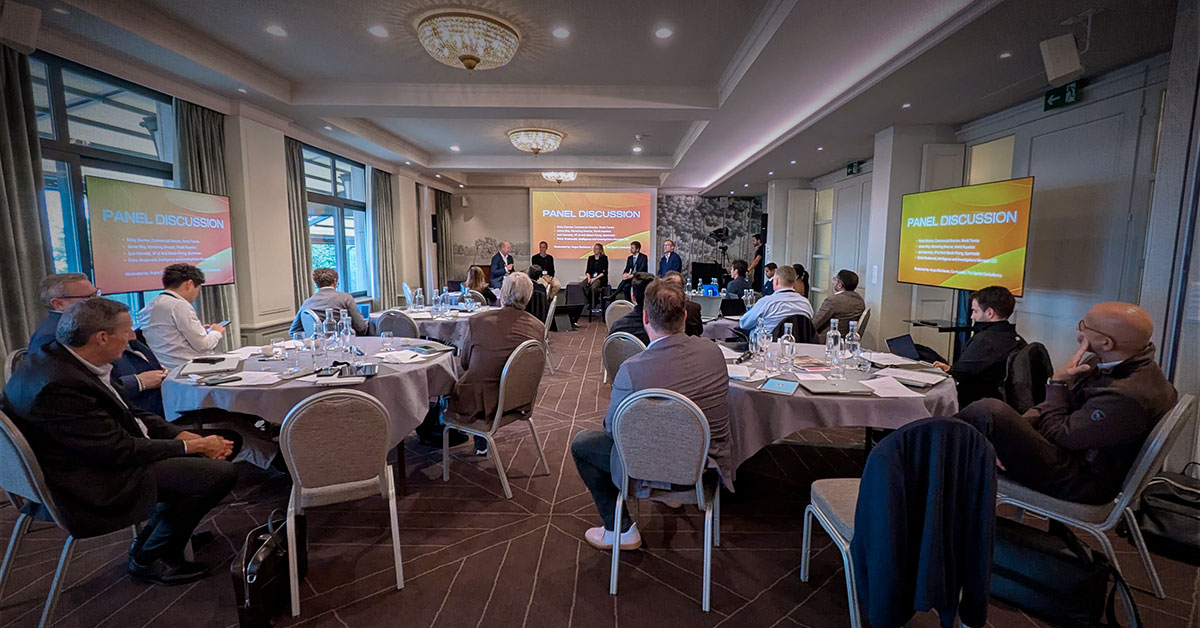
Yesterday, on November 4, in Lausanne, N3XT Sports CEO Mounir Zok put a simple question to representatives of more than 20 Summer Olympic International Federations (IFs): if you had to reach 1,000 of your fans tomorrow, could you?
About half the hands went up. The other half stayed down.
That show of hands captures an uncomfortable truth about sports data. These are organizations whose sports are followed around the world, yet for many of them the relationship with that audience is not yet their own.
The question opened the data session of the ASOIF Commercial Workshop, organized by the ASOIF Commercial Commission, where IFs and industry experts explored two routes to sustainable commercial growth: sports data and sports betting. This article shares N3XT Sports’ view of what mattered most.
The workshop was N3XT Sports’ second contribution to an ASOIF workshop this year. In May, Zok opened the ASOIF Sport Development and Education workshop with a keynote on emerging markets, the modernization of event delivery and AI maturity within IFs. The thread between the two sessions is data: the same foundations that make AI useful are the ones that make fans knowable, and knowing fans is where new revenue begins.
The case for acting is growing. An Altman Solon survey from last year ranked fan data and sports data among the most important emerging monetization levers in sport. It also pointed to a blind spot: around 20 percent of fans now consume sport on unconventional platforms, so any IF’s picture of its fans is already incomplete.
Followers are rented, relationships are owned
For decades, sport has run on a simple belief: build the audience on social media and broadcast streams, and the money will follow. That belief hides a problem. Most IFs rent their fans, and the relationship sits with someone else.
Fans follow on social platforms, where the IF makes the content but the platform holds the relationship. They watch on broadcast, where the viewing data sits with the broadcaster. They attend events and buy tickets, often without the IF ever learning who they are.
Yet the same IF knows the full name of every athlete in its sport, because athletes must register through its systems. The asymmetry is striking: complete knowledge of the people who play, and partial knowledge of the people who follow, watch and attend.
Control decides what is possible
Knowing what data exists is only half the picture. The other half is who controls it. Zok’s keynote drew on the N3XT Sports Data Value Map, a proprietary framework that organizes sports data into domains, the data types within each domain, and the routes through which that data can create value. In the Data Value Map, control of the event decides which of those routes are open.
An IF that runs its own event can pursue more routes to value than one whose event is run by a partner or a local organizing committee. Both have more room than an IF whose event reaches fans only through a broadcaster, where the viewer’s identity rarely travels with the feed.
The practical lesson is that having a right to data is not the same as having the data. Hosting agreements, ticketing contracts and media rights deals quietly set the ceiling on what an IF can do.
Three moves for Monday morning
From the Data Value Map, Zok set out three practical steps for any IF:
- Inventory what you hold. Map the data your IF already has across fans and community, participation, athletes, competition, commercial and media, and operations, and note who controls each asset.
- Read your agreements. Look for the fan data clauses in ticketing, hosting and media contracts to see who owns what, and who can use it.
- Pick one thing. Choose a single early win that builds momentum and earns leadership’s trust before asking for larger investment.
The panel that followed brought together FIBA, FEI and Volleyball World, three IFs starting from different places and at different stages. The common thread was sequence: foundations first, then a real understanding of audiences and direct relationships with fans, and only then monetization.
Betting asks for the same discipline
The afternoon turned to sports betting, with contributions from Sportradar, the PGA Tour, World Aquatics, World Tennis and the IOC.
Betting is, in a sense, a byproduct of sports data, which is why the two topics belong in the same day. It is also why the integrity of the data matters so much. The message was consistent: approach the opportunity with eyes open. Integrity, governance and reliable data come first, and the commercial structure of any deal deserves as much scrutiny as the headline number.
No single route
If one message ran through every session, it was that there is no one-size-fits-all approach. IFs differ in size, resources, audiences and maturity, and each must choose the opportunities that fit its own assets.
An IF still consolidating spreadsheets and disconnected systems has different priorities from one that already runs integrated fan profiles. For the first, the win starts with clean, owned foundations. For the second, it lies in activation, partnerships and new products.
That is the principle behind N3XT Sports’ digital transformation work with IFs: start with an honest assessment of data maturity, build the foundations and governance that make data trustworthy, and only then design the commercial model that fits.
Antony Scanlon, Chair of the ASOIF Commercial Commission and Executive Director of the International Golf Federation (IGF), framed the workshop as a way to help members “understand where value can be created.” For sports data, that starts with the question Zok put to the room.
If you had to reach 1,000 of your fans tomorrow, could you? If the answer is not yet, your IF is in good company, and the path forward is clearer than it looks.
