

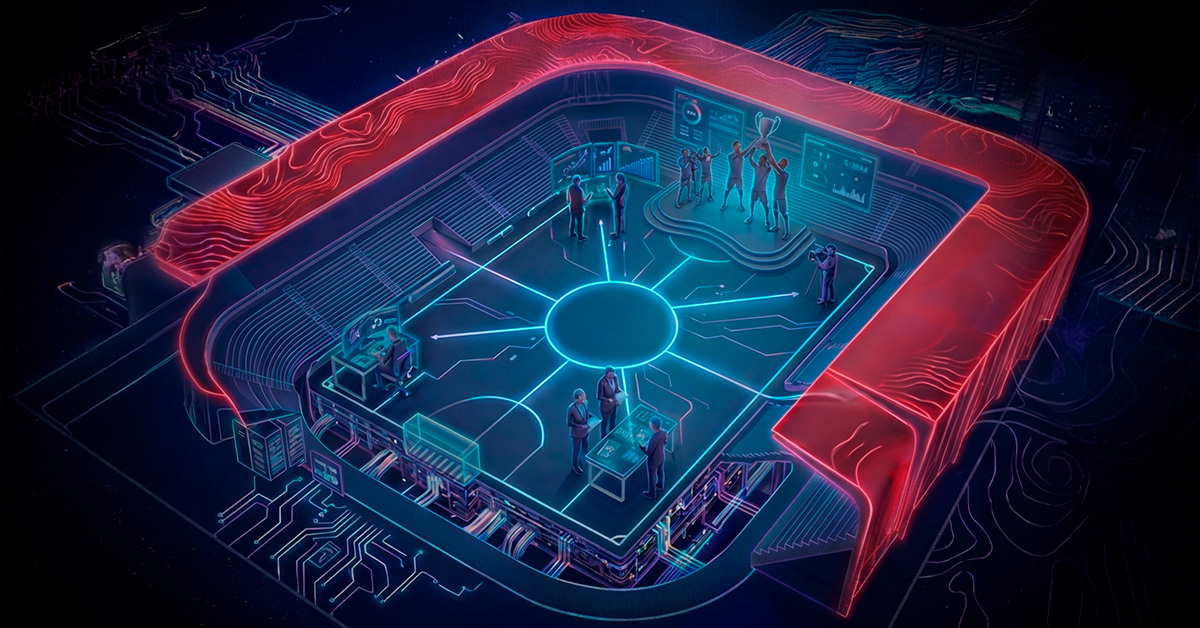
Across global sport, digital transformation is redefining how clubs, leagues, and federations engage with fans, improve in-house efficiencies, and unlock commercial value. What was once a business built primarily on broadcasting rights and matchday attendance is evolving into a sophisticated digital ecosystem centered around direct-to-consumer (D2C) platforms, centralized fan data, and personalized engagement strategies. From football clubs to Olympic federations, organizations are investing heavily in their digital capabilities to better understand their audiences and deliver more tailored fan experiences.
In European football, digital maturity increasingly correlates with commercial success. Our research into leading clubs shows that organizations integrating digital tools across marketing, operations, and analytics tend to generate stronger fan engagement and diversified revenue streams. Yet despite widespread investment in digital platforms, many clubs are still in the early stages of converting their fan data into actionable insight. As our industry analysis highlights: “… the majority of elite European clubs are collecting the data, but there is a case that they could be using the data more effectively and to better serve their commercial growth and processes.”
This transformation extends beyond club football. International Federations (IF) are building integrated digital ecosystems designed to centralize fan data and improve engagement strategies. At the core of these initiatives is a strategic principle increasingly shaping the sports industry. The Fan-Data Feedback Loop™, where fan interactions generate data that informs marketing, engagement, and commercial decisions, in turn creates new experiences that generate further insights.
Data-Driven, AI-Informed Marketing Initiatives
Marketing in sport is undergoing a fundamental shift as organizations move from traditional mass communication towards personalized fan engagement. Rather than relying solely on manual campaigns or purely automated systems, leading sports organizations are adopting data-driven, artificial intelligence-informed (AI) marketing initiatives that re-define strategic planning based on real-time audience and stakeholder metrics – and at scale.
Football clubs provide one of the clearest benchmarks for this evolution. Digital platforms – including mobile apps, over-the-top (OTT) streaming services, subscription platforms, and ecommerce – generate vast quantities of first-party fan data. Our research shows that around 95 percent of elite European football clubs collect first-party fan data through mobile platforms, while approximately 85 percent allow fans to personalize their digital experiences, such as selecting their favorite players or competitions.
However, data alone does not drive engagement. Marketing teams interpret insights, craft narratives, and design campaigns that resonate emotionally with supporters, while AI tools help identify audience trends, segment fans, and optimize communication timing. For example, Olympic IFs are also demonstrating how this model can scale across different markets. United World Wrestling (UWW), in collaboration with N3XT Sports, connects global audiences and captures engagement data via a combination of SEO-friendly offerings, including a dedicated mobile app and the UWW+ streaming service.
Similarly, the Fédération Internationale de Volleyball (FIVB), in collaboration with its Volleyball World commercial arm, has invested heavily in digital storytelling and cross-platform content strategies that have significantly expanded the reach of its international competitions. These initiatives highlight a key principle of modern sports marketing: successful engagement strategies combine human creativity with data-driven insights, allowing organizations to build deeper connections with fans across digital channels.
CRM and CDP Adoption | Centralizing the Sports Data Ecosystem
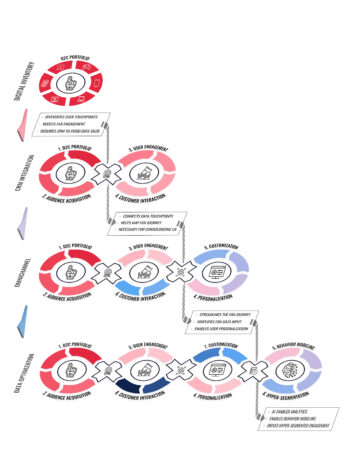
While marketing innovation drives fan engagement, it cannot function effectively without a robust data infrastructure. This is why customer relationship management (CRM) platforms and customer data platforms (CDP) have become foundational technologies in modern sports organizations.
Historically, many clubs operated fragmented digital systems with their ticketing databases, ecommerce platforms, membership programs, and content systems functioning independently. This fragmentation limited organizations’ ability to develop comprehensive fan profiles or deliver consistent engagement strategies.
Centralized data ecosystems solve this challenge by integrating data from every digital touchpoint into a unified platform. CRM and CDP infrastructures create a single source of truth for fan information, enabling clubs and federations to analyze supporter behavior across multiple channels.
Insights from the digital transformation efforts of the Royal Belgian Football Association (RBFA) illustrate this challenge clearly. Addressing this subject, in an interview with N3XT Sports, one of the most complex aspects of digital transformation is consolidating data across multiple systems and platforms. The challenge, according to the federation, “is to connect and consolidate a lot of different data from a lot of different systems”.
The federation’s mobile platform connects ticketing, video content, and a consolidated user experience (UX) into a single digital environment. This centralized infrastructure enables the organization to capture fan interactions across its ecosystem and build a more comprehensive understanding of supporter behavior. Centralization is the critical foundation for The Fan-Data Feedback Loop™, allowing organizations to collect, analyze, and activate fan insights continuously across their digital platforms.
The Fan-Data Feedback Loop™ | 360° Fan Intelligence
Once centralized infrastructure is in place, sports organizations can begin activating The Fan-Data Feedback Loop™, a strategic framework that transforms fan engagement into continuous insight and fan-value.
The concept is simple but powerful: every fan interaction – whether purchasing a ticket, streaming video content, engaging with social media content, or browsing merchandise – generates valuable data. That data is analyzed to understand fan preferences and behaviors, which then informs marketing campaigns, content strategies, and product and strategic development. These improved experiences encourage further engagement, generating new data – continuing the cycle.
This feedback loop enables organizations to build 360° fan intelligence, combining multiple data sources, including digital engagement metrics, demographic data, and transaction history, into a holistic understanding of each supporter.
Football clubs are increasingly integrating ticketing, merchandise, OTT streaming, and loyalty programs within unified digital ecosystems accessible through mobile platforms. By analyzing interactions across these services, clubs can tailor communications and experiences to individual fans. Through this process, organizations can evolve from basic audience segmentation towards highly personalized engagement strategies. Instead of broadcasting identical messages to millions of fans, clubs and federations can deliver individualized experiences such as:
- Leveraging freemium video content to drive audience acquisition, as well as customer conversions, via social media and digital marketing.
- Personalizing sponsorship and rights-holder partnerships within the organization’s ticketing and commercial strategies.
- Augmenting the stadium experience by bringing fans closer to in-stadia commercial partnerships via mobile.
This continuous cycle of data collection, analysis, and activation transforms fan engagement from a static marketing activity into a dynamic and evolving relationship between sports organizations and their audiences.
From Fan Intelligence to Strategic and Performance Management
Digital transformation is rapidly reshaping the global sports industry and extends beyond fan engagement into broader sports business strategy. Once organizations develop mature digital ecosystems, insights begin to inform decision-making across the entire enterprise. Fan intelligence can influence strategic planning, sponsorship activation, content development, and international expansion strategies. By analyzing engagement patterns and behavioral data, sports organizations can identify growth opportunities and allocate resources more effectively.
European football clubs are among the most visible benchmarks for this transformation in the private sector, but similar approaches are emerging at federation level. As digital ecosystems continue to evolve, the organizations that succeed will be those that treat fan data not simply as a technical resource, but as the foundation of their engagement strategies and models for commercial growth.
In an increasingly competitive global sports landscape, digital transformation has become the engine powering the next generation of fan engagement, sports business innovation, and commercial opportunity. To find out more about how N3XT Sports can serve your organization, fill out the form below, and we’ll be in touch. We look forward to hearing more about your journey.